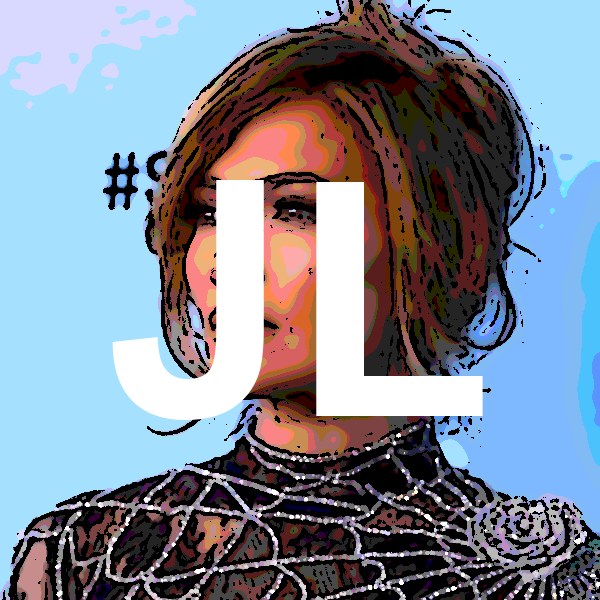
JENNIFER LOPEZ
Puerto Rican (both parents) — with Spanish, African, and Taíno indigenous roots
Quick Facts
▶ Watch
Jennifer Lopez — heritage & background
Jennifer Lopez Ethnicity, Race & Heritage: Is She Mixed Race? Full Background Explained
Quick answer: No, Jennifer Lopez is not mixed race in the Black/White biracial sense — both of her parents are Puerto Rican. She is a Latina of Puerto Rican descent, and her heritage reflects the rich blend of Spanish European, African, and indigenous Taíno ancestry that characterizes the Puerto Rican people as a whole.
Is Jennifer Lopez Mixed Race? Is She Biracial?
No — Jennifer Lopez is not mixed race in the traditional American biracial sense. Both of her parents are Puerto Rican, making her Latina/Hispanic on both sides. However, it's important to understand that Puerto Rican heritage itself reflects centuries of racial mixing: the island's population descends from Spanish colonizers, enslaved Africans brought to the Caribbean during the transatlantic slave trade, and the indigenous Taíno people who inhabited the island before European contact.
This means that J.Lo, like most Puerto Ricans, carries a blend of European (Spanish), African, and indigenous DNA — but this is not the same as being biracial in the American sense of having parents from two different racial groups. Both her parents are Puerto Rican, and Puerto Rican identity encompasses all three of these ancestral strands.
So to answer the most-searched questions directly: Jennifer Lopez's race is Hispanic/Latino — specifically Puerto Rican. Her background is Puerto Rican on both sides. Her heritage reflects the Spanish, African, and Taíno blending that defines Puerto Rican ethnicity. She is not biracial in the American sense, but she carries a genuinely multicultural genetic and cultural heritage rooted in the Caribbean island of Puerto Rico.
What Is Jennifer Lopez's Ethnicity?
Jennifer Lopez's ethnicity is Puerto Rican — a designation that carries enormous cultural weight in American life, particularly in New York City's Latino communities. She was born on July 24, 1969, in the Castle Hill neighborhood of The Bronx, the daughter of Puerto Rican parents who had emigrated to New York.
Her ethnicity has been central to her career. J.Lo broke through at a time when Latina representation in mainstream Hollywood was extremely limited, and her visibility — as a dancer, actress, and singer — opened doors for subsequent generations of Latina artists. Her 1999 film Selena (in which she played the murdered Tejano icon) and her debut album On the 6 (1999) established her as the first Latina to achieve a #1 album and a #1 film in the same week, a milestone that underscored the power of Latina cultural representation.
Her Puerto Rican ethnicity is a matter of deep personal pride. J.Lo has spoken numerous times about growing up in The Bronx as a Puerto Rican girl and the role of her heritage in shaping her drive, her aesthetic, and her connection to her community.
Father's Side: Puerto Rican Heritage
Jennifer Lopez's father, David Lopez, is Puerto Rican — he worked as a computer technician and came from the Puerto Rican community that settled in New York City during the mid-20th century. Puerto Rican migration to the United States, particularly to New York, accelerated dramatically in the 1940s and 1950s, when the island's economy was being transformed and many families sought better opportunities on the mainland.
David Lopez's Puerto Rican heritage traces back to the island's complex racial history. Puerto Ricans typically have ancestry from three sources: Spanish colonizers (who arrived with Columbus in 1493 and established the Spanish colony), enslaved West Africans (brought to Puerto Rico primarily in the 16th-19th centuries to work on sugar plantations), and the indigenous Taíno people (who were largely decimated by disease and colonial violence but whose genetic and cultural legacy persists).
Jen's paternal grandparents were Puerto Rican, part of the island's population before the great migrations to the mainland. Their specific names have not been made widely public.
Mother's Side: Puerto Rican Heritage
Jennifer Lopez's mother, Guadalupe Rodríguez (known as Lupe), is Puerto Rican — a homemaker who raised Jennifer and her sisters Leslie and Lynda in The Bronx. Lupe is a deeply devout Catholic whose faith has been a cornerstone of the Lopez family and has influenced Jennifer's own relationship with religion.
Lupe Rodriguez's Puerto Rican heritage mirrors her husband's — rooted in the same Caribbean island with its rich Spanish, African, and indigenous Taíno ancestry. Like David, Lupe came from the Puerto Rican diaspora community that made New York City — and particularly The Bronx — the most Puerto Rican city outside of San Juan itself.
Jennifer has spoken extensively about her mother's influence on her work ethic, her personal values, and her sense of identity as a Puerto Rican woman.
Grandparents: A Complete Picture
Paternal Grandfather (David Lopez's father): Puerto Rican, born on the island. Jennifer's paternal grandfather was part of the Puerto Rican community before the great migration to New York. His name has not been widely publicized.
Paternal Grandmother (David Lopez's mother): Puerto Rican, born on the island. Jennifer's paternal grandmother carries the Puerto Rican heritage through David's maternal line. Her name has not been disclosed publicly.
Maternal Grandfather (Lupe Rodriguez's father): Puerto Rican, born on the island. Jennifer's maternal grandfather is part of the Rodriguez family's Puerto Rican heritage. His name has not been made public.
Maternal Grandmother (Lupe Rodriguez's mother): Puerto Rican, born on the island. Jennifer's maternal grandmother rounds out the Puerto Rican heritage in her family tree. Her name has not been publicly disclosed.
Marriages and Children's Heritage
Jennifer Lopez has been married four times. Her most famous recent marriage was to actor and director Ben Affleck, whom she married on July 16, 2022, in Las Vegas. Ben Affleck is of White American descent — primarily English and Irish heritage — making their union an interracial pairing between a Puerto Rican Latina and a White New Englander. They filed for divorce in August 2024.
Jennifer has twins with her third husband, Marc Anthony (Marco Antonio Muñiz), who is also Puerto Rican: Maximilian David (Max) and Emme Maribel Muñiz, born February 22, 2008. Her twins are fully Puerto Rican on both sides.
Jennifer Lopez in Her Own Words on Heritage
Jennifer Lopez has been one of the most outspoken Latina celebrities about the importance of Puerto Rican pride and representation.
"I am Puerto Rican. That is who I am. That is my blood, my culture, my music, my food. It's everything. I carry it everywhere I go, on every stage in the world." — Jennifer Lopez, Latina Magazine, 2011
Is Jennifer Lopez Alive?
Yes, Jennifer Lopez is alive. As of 2026, she is 56 years old. She remains one of the most commercially successful entertainers in American history — her career spanning acting, music, fashion, and entrepreneurship. She continues to release music, act in film and television, and maintain a massive global following.
Visual Family Tree
JENNIFER LOPEZ
(Puerto Rican / Latina)
David Lopez
(Puerto Rican)
[Unknown]
[Unknown]
Guadalupe Rodriguez
(Puerto Rican)
[Unknown]
(Puerto Rican)
[Unknown]
(Puerto Rican)
Sources
Interviews & Direct Quotes
- Latina Magazine, Jennifer Lopez Puerto Rican pride, 2011 — latina.com
- Vogue, Jennifer Lopez cover story — vogue.com
- People Magazine, Jennifer Lopez family feature — people.com
Books & Long-Form Biography
- Lopez, Jennifer. True Love. Celebra, 2014 — amazon.com
- Tracy, Kathleen. Jennifer Lopez. Mitchell Lane Publishers, 2008
Genealogy & Ethnicity Research
- EthniCelebs.com — Jennifer Lopez ethnicity profile
- Wikipedia — "Jennifer Lopez" — en.wikipedia.org/wiki/Jennifer_Lopez
- Ancestrum.com — Jennifer Lopez
EthniCelebrity Research Team
Ethnicity & Heritage Writers
Our team specialises in researching and documenting the ethnic backgrounds, nationality, and ancestry of public figures — drawing on genealogical records, interviews, and verified biographical sources.